A Matter of Survival: Radical Adaptation vs. Forced Migration for the Marshallese People Amid Climate Change
By Jeffrey Camille
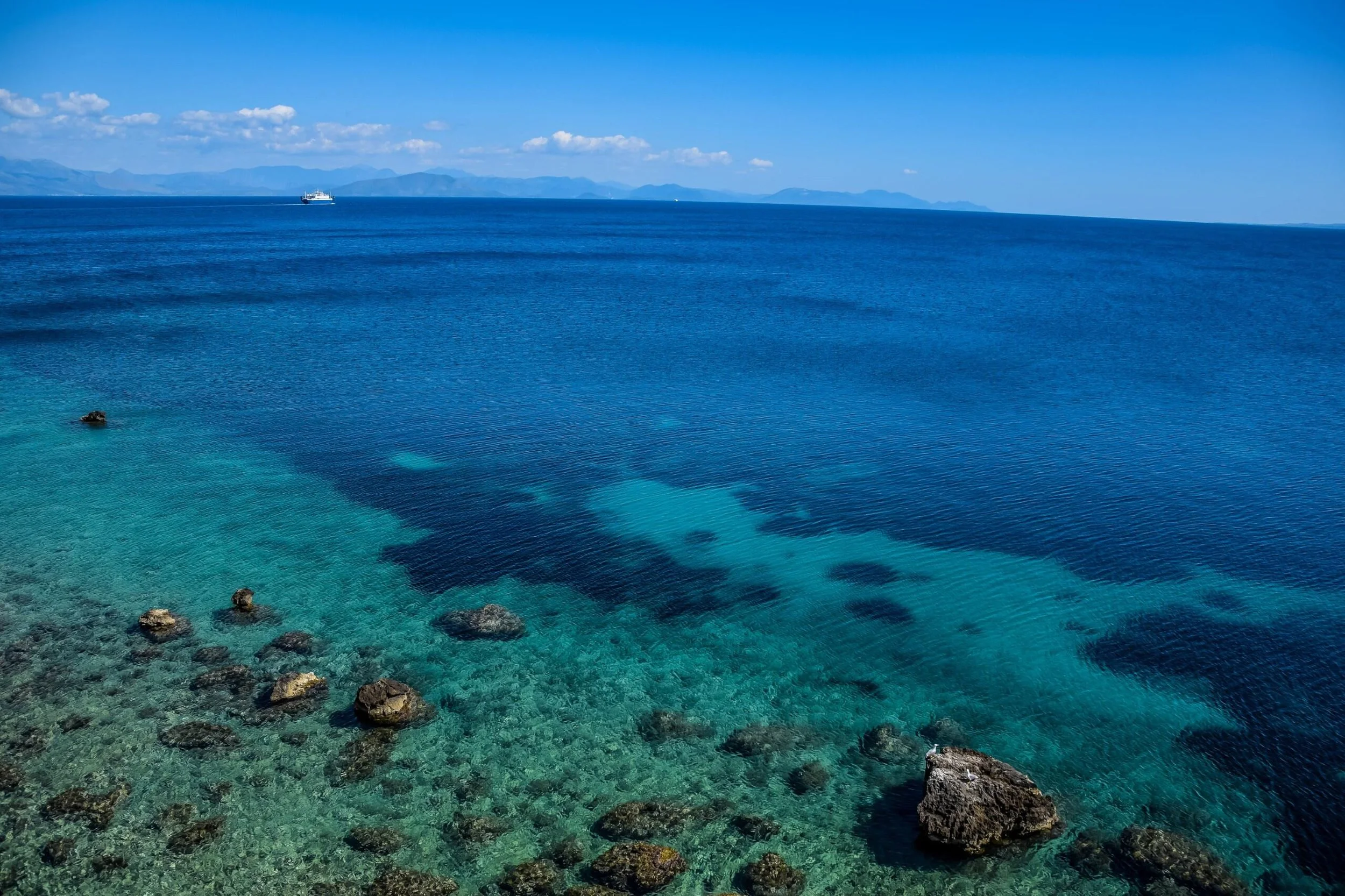
Photo Credit to Stavros Piperdis
Introduction
At its population peak, the Marshall Islands were home to over 50,000 people, half of whom were under the age of eighteen.[1] With a rapidly changing climate driving sea-level rise, the existence of this low-lying Pacific state is under threat: the country may become uninhabitable within the lifetimes of its current inhabitants.[2] These perilous conditions are exacerbated by a colonial history that has forced the country to depend on foreign aid. The most injurious effect of this coloniality on the Marshallese climate crisis is a radioactive legacy created by the United States (US) from 1946 to 1958. [3] During these years, the US tested 67 nuclear weapons on the populated Bikini and Enewetak Atolls, forcing the communities on and near them to evacuate their ancestral homeland, where they had lived for over 2,000 years.[4] To this day, thousands of Marshall Islanders remain in exile, while the few who have returned suffer adverse and long-term health risks due to the radioactive fallout that contaminates the lands and waters.[5]
The Marshallese government is committed to implementing large-scale measures to mitigate the devastation of its islands caused by anthropogenic climate change. Yet external funders, on whom it relies for financing this commitment, have shown little interest in humanitarian investment.[6] As the clock on climate-induced devastation continues to tick, Marshall Islanders face a critical choice between radical adaptation or forced migration. In identifying and deconstructing the challenges ahead, this article offers three key insights on how the loss of culture, membership in a global society, and the battle to become ‘worthy’ of refuge shape the Marshallese experience in the face of climate change.
The Issue of Culture
When leaving the Marshall Islands, cultural heritage is adversely affected by the loss of significant sites and activities associated with Marshallese identity. Drawing on in-depth interviews with members of the Marshallese diaspora in the US, Alison Heslin examines this relocation by analyzing the motivations for migrating, the day-to-day differences between the Marshall Islands and the US, and the difficulties and opportunities of adapting to life outside the Marshall Islands. [7]
The main challenge confronting the Marshallese diaspora stems primarily from disruptions to their customary activities. With a culture rooted in oceanic subsistence, most displaced Marshallese people are skilled in activities such as spearfishing and aquaculture.[8] Such practices, however, are not common in the mainland US, meaning thousands of relocated Marshall Islanders experience the loss of culturally significant activities. Additionally, alongside the loss of these activities, the loss of geographically significant sites becomes evident. For example, the waters surrounding the Marshall Islands are icons of the Marshallese way of life. Many islanders in these waters utilize canoes for interisland navigation and fishing.[9] As a result, when relocated to an urban area in the US, the stark differences in geographical composition compel displaced Marshall Islanders to abandon their traditional customs and acquire skills that function more effectively within an industrialized landscape.
Despite these difficulties, opportunities for cultural preservation exist beyond the Marshall Islands. Helsin notes that "Marshallese residents in the US can continue to speak Marshallese, eat Marshallese foods, and spend time with the Marshallese communities when living in a city with a Marshallese population.”[10] Migration from the Marshall Islands to countries such as the US can thus create opportunities for the continued practice of certain aspects of Marshallese culture. Nonetheless, practices inherently tied to the homeland—such as the cultivation of certain fruits—are not reproducible outside the Marshall Islands.
The Issue of a Global Society
While Marshallese people lose elements of cultural significance as they enter the diaspora, they may also begin to identify as members of a larger global society. Brandon Gorman and Charles Seguin argue that those on the social periphery, those outside of the elite, identify with a globalized world “because adverse local conditions push them toward universalistic, global identities.”[11] In other words, when individuals face a threat, such as rising sea levels in the case of the Marshall Islanders, those in the social periphery are likely to identify as members of a global society to regain a sense of security that is otherwise lost.
Applying the finding to the case of the Marshallese diaspora, this article argues that displaced Marshall Islanders are likely to identify as world citizens because they cannot find security within the local, particularistic identity of being ‘Marshallese.’ To be clear, this is not to contend that those in the diaspora have abandoned or are abandoning their Marshallese identity. Rather, in the search for safety, they may identify with a globalized conception of citizenship, in which, as Marshallese people, they are members of a global society that provides protection (e.g., United Nations programs for displaced peoples). The most obvious condition prompting these individuals to identify with a globalized world is the Marshallese government’s inability to address the threat of rising sea levels—a circumstance notably engineered by the inaction of foreign powers, which, as previously stated, has made the island nation dependent on foreign aid.
Gorman and Seguin’s writing quietly highlights how the Marshallese climate response can shift from forced relocation to radical adaptation. If the Marshallese government could create and sustain security within Marshallese identity, rooted in the lands of the Marshall Islands (for example, through safeguards against sea-level rise and higher employment for a shrinking youth population), then Marshallese people would not need to flee their homes and identify with a global society outside their homeland. Accordingly, if foreign countries such as the US seek to halt the inevitable migration of Marshall Islanders to their state, they should fund measures that enable the Marshallese government to effectively combat the effects of climate change on the islands. This, in turn, would ensure that Marshall Islanders feel secure in their homeland and therefore have no need to leave their familial homes.
The Issue of ‘Worthiness’ for Refuge
Given that the prospect of radical adaptation in the Marshall Islands remains unpromising to date, a battle of ‘worth’ will likely ensue as Marshallese people find their relocation debated by governments deciding whether they are worthy of state-sanctioned aid. Talia Shiff considers such dynamics of worth in examining the lawmaking processes that define the ‘deserving’ and ‘undeserving’ categories of refugees.[12] It is important to note, however, that displaced Marshall Islanders are not recognized as refugees by any national or international authorities, as climate change is not currently documented as a factor that entitles an individual to refugee status. Nonetheless, Shiff’s article remains applicable to the case of the Marshallese diaspora for two reasons: (1) discussions of ‘climate refugees’ are on the rise, with bodies like the United Nations Framework Convention on Climate Change evaluating such classification, and (2) the notion of ‘worth’ being pertinent to how states consider the disbursement of aid to vulnerable populations.[13]
In determining whether displaced Marshall Islanders will be deemed eligible for relocation aid, the immutability of their circumstances is likely to be a chief factor in assessing such eligibility. In this case, immutability refers to the “characteristics […] that are immutable or fundamental to a person’s individual identity or conscience.”[14] Applying this factor to the Marshall Islands suggests that countries like the US may deem Marshallese people who have relocated to their territory worthy of protection, provided that the conditions that forced them to leave the Marshall Islands were beyond their control. The most prominent example of someone typically deemed worthy of refuge is a woman fleeing gender violence. In this case, being a woman is regarded as immutable since that identity is so essential to the individual that changing it is nearly impossible. Her experiences are, indeed, so tacitly entwined with her gender that violence is inflicted upon a woman for the sole reason of her being a woman.[15]
Relating this logic of immutability to the climate crisis in the Marshall Islands is, unfortunately, not as straightforward. Countries will likely view the threat of rising sea levels as a mutable condition that does not affect the fundamental identity of the Marshallese people. In other words, potential host states may assert that infrastructure, such as dykes and levees, exists to combat climate-induced environmental changes, implying that Marshall Islanders have no reason to seek refuge outside their homeland. This assertion, however, would be grossly mistaken and neglectful of the challenges that have effectively rendered the Pacific nation incapable of preventing a climate-induced catastrophe. First, because potential solutions address only the symptoms, not the root cause of climate change; and second, because the capacity to implement such solutions was stripped from the Marshallese government decades ago.
Regarding symptoms versus causes, the Marshall Islands could perhaps take measures to mitigate the consequences of rising sea levels. However, if leading global polluters such as the US retain environmentally degrading practices (most notably, heavy CO2 emissions from energy production and use), the effects of climate change, both current and future, will not be mitigated. Persistent climate change will occur, and sea-level rise will not be halted by piecemeal measures to address an ever-growing problem. Concerning the Marshallese government’s ability to implement mitigation measures, earlier assessments of the nation’s colonial history indicate that the US occupation left the country dependent on foreign aid for survival. Without foreign intervention, the Marshall Islands lack the resources necessary to successfully combat rising sea levels. The continued existence of their country thus likely rests with foreign powers.
Conclusion
In deconstructing the challenges faced by the Marshallese diaspora, this article has explored the struggle between adaptation and relocation experienced by Marshall Islanders. My analysis has specifically tackled the issues shaping a generation of displaced Marshallese people: their loss of cultural heritage, their quest for universalistic identification, and their claim for worthiness. While my work is focused on the Marshallese case, dozens of other island states face similar devastation as rising sea levels threaten their existence. The idea of a ‘climate refugee’ is therefore not fiction but an emerging reality that the world must confront. In the interest of building long-lasting global stability, it is important for everyone to recognize that a changing climate is disrupting entire regions and forcing thousands to flee dangerous conditions in pursuit of refuge. The case of the Marshall Islander is, therefore, emblematic of every other displaced individual attempting to guard themselves against the atrocities of climate-induced harm.
Sources
[1] The population peak of 52,044 was reached in 2010. See World Bank Group, “Population, Total - Marshall Islands.” World Bank Group Data, (Updated 2024). https://data.worldbank.org/indicator/SP.POP.TOTL?locations=MH.
[2] Michelle Mizner & Katie Worth. “The Last Generation.” Public Broadcasting Service, (2018). https://www.pbs.org/wgbh/frontline/article/the-last-generation/ (Accessed 26/01/2026).
[3] Autumn Bordner & Caroline E. Ferguson. “Marshall Islands Could be Wiped Out by Climate Change – and Their Colonial History Limits Their Ability to Save Themselves.” The Conversation (2020).
https://theconversation.com/marshall-islands-could-be-wiped-out-by-climate-change-and-their-colonial-historylimits-their-ability-to-save-themselves-145994 (Accessed 27/01/2026).
[4] Susanne Rust. “How the U.S. Betrayed the Marshall Islands, Kindling the Next Nuclear Disaster.” Los Angeles Times, (2019) https://www.latimes.com/projects/marshall-islands-nuclear-testing-sea-level-rise/ (Accessed 27/02/2026).
[5] Steven L. Simon et al. “Radiation Doses and Cancer Risks in the Marshall Islands Associated with Exposure to Radioactive Fallout from Bikini and Enewetak Nuclear Weapons Tests: Summary.” Health Physics 99, No. 2 (2010):
105–123. https://doi.org/10.1097/hp.0b013e3181dc523c.
[6] Bordner & Ferguson, “Marshall Islands Could be Wiped Out by Climate Change.”
[7] Alison Heslin, “Climate Migration and Cultural Preservation: The Case of the Marshallese Diaspora.” In Reinhard Mechler et. al. (Eds.), Loss and Damage from Climate Change, Climate Risk Management, Policy and Governance, (2019): 383–391. https://doi.org/10.1007/978-3-319-72026-5_16.
[8] Heslin, “Climate Migration and Cultural Preservation,” 386.
[9] Heslin, “Climate Migration and Cultural Preservation,” 387.
[10] Heslin, “Climate Migration and Cultural Preservation,” 389.
[11] Brandon Gorman & Charles Seguin, “World Citizens on the Periphery: Threat and Identification with Global Society.” American Journal of Sociology 124, No. 3 (2018): 705–761. https://doi.org/10.1086/699652. For quote, see 706.
[12] Talia Shiff, “Reconfiguring the Deserving Refugee: Cultural Categories of Worth and the Making of Refugee Policy.” Law & Society Review 54, No. 1 (2020): 102–132. https://doi.org/10.1111/lasr.12456.
[13] See United Nations Framework Convention on Climate Change, “Climate-Induced Displacement and Migration: Policy Gaps and Policy Alternative; A Likely Legal Instrument for a Rights-Based Political Solution.” (2015). https://unfccc.int/files/adaptation/groups_committees/loss_and_damage_executive_committee/application/pdf/briefi ng_paper_climate_induced_displacement_and_migration.pdf (Accessed 02/02/2026).
[14] Shiff, “Reconfiguring the Deserving Refugee,” 116.
[15] Shiff, “Reconfiguring the Deserving Refugee,” 117–118.